When Bryan first started experimenting with computer science in sixth grade, he had no idea it would shape his future.
The lesson was simple. Using Scratch, a block-based programming platform, Bryan learned how to move a small animated sprite across a screen. But something about that moment stuck with him.
“That was my first taste of, wow, I can build whatever I want,” he remembers.
At the time, Bryan didn’t yet see how that spark could translate into a career. Growing up in Chelsea, Massachusetts, just outside of Boston, he didn’t have many examples of people working in technology.
His parents had immigrated to the United States from El Salvador in the early 2000s, focused on building a stable life for their family. When they first arrived, they worked in a restaurant and took whatever shifts they could find. Later, Bryan’s father began working in the moving industry while his mother moved into elderly care.
Like many immigrant families, their priority was opportunity for the next generation.
But technology wasn’t a world they had experience navigating.
“I didn’t have anybody in tech around me,” Bryan says. “A lot of my family members just went straight into the moving industry like my dad, or something similar to what my mom does.”
Even as Bryan grew interested in coding, he didn’t know what a career in tech actually looked like.
“I didn’t know anything about tech. I didn’t know what it could even look like,” he says. “Before SMASH, I didn’t even know what a tech role looked like.”
Bryan first heard about SMASH while preparing to enter high school. The transition felt overwhelming. Suddenly, conversations about grades, college, and future careers felt much more real.
That’s when counselors encouraged him to apply.
“That’s where SMASH came in,” Bryan says. “SMASH was my way of just making sure I take the first steps to leading the path I want to go on.”
At SMASH Northeastern, Bryan found something he hadn’t experienced before: a community of peers who shared similar backgrounds and aspirations.
“For the first time, it felt so cool to have so many people that looked like me that had the same backgrounds as me pursuing the same career,” he says. “It just felt like wow, we’re all going to do this together.”
That sense of belonging became a powerful motivator. Instead of feeling like he was figuring everything out alone, Bryan was surrounded by other SMASH scholars who were just as curious about technology and just as determined to succeed.
The program also provided practical support that helped him prepare for college. Workshops on college essays, mentorship, and hands-on STEM courses helped Bryan build confidence in his path.
“Having those people around me made me want to do this not only for me, but also for the community around me,” he says.
One SMASH activity in particular stayed with him.
Students were asked to draw a scientist. When they shared their drawings, Bryan noticed something surprising.
Nearly everyone had drawn the same image: an older white man wearing a lab coat.
That moment sparked deep reflection for Bryan about representation in science and technology.
“When I first heard that activity, that felt like a sudden change,” he says. “Like the walls trying to go into a non-diverse field were just crumbling down. There are people like me trying to do it. But I also could be that role model.”
That realization became the foundation of his college essay and something that continues to motivate him today.
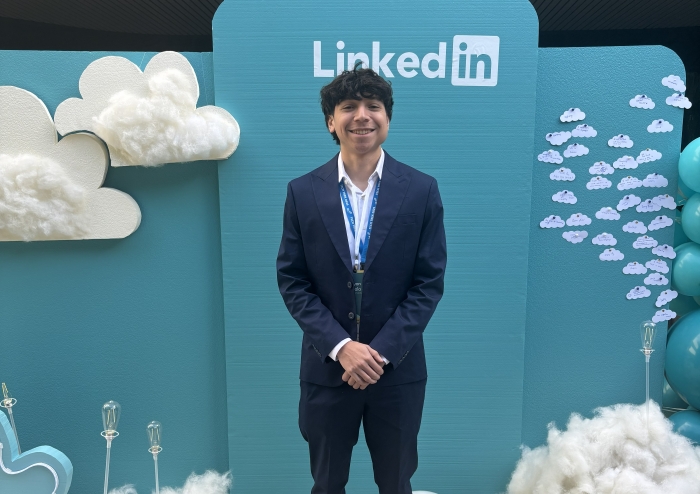
Today, Bryan is a computer science student at Boston University, and he’s already working as a software developer.
His journey into the field didn’t happen overnight. Like many college students, Bryan balanced coursework with part-time jobs to help support his education.
Last year, he worked long evening shifts at a bar, often finishing at two in the morning before waking up for classes the next day.
“It was tough,” he says.
But everything changed when Bryan applied for an opportunity with Lirvana Labs, a company developing educational technology tools for students and teachers.
At first, he joined the team as a game designer, helping create interactive learning experiences for a platform called Yeti Confetti Kids.
The work felt strangely familiar.
It reminded him of the same Scratch projects that first sparked his interest in programming years earlier.
“I remember seeing the job and thinking, wow, this reminds me of my sixth-grade class where I made the little sprite move,” he says.
Bryan threw himself into the opportunity, asking questions, learning from colleagues, and gaining hands-on experience that extended far beyond the classroom.
One mentor in particular, senior software engineer Roma, helped guide him through the technical and professional skills needed to succeed in the industry.
“There’s a lot you can learn in classes,” Bryan says. “But hands-on experience is just so valuable.”
What started as a temporary internship soon turned into a larger opportunity. Bryan now works part-time as a software developer while continuing his studies at Boston University.
The role has transformed his college experience.
Instead of juggling late-night service shifts, Bryan now works remotely in his field, building real software while balancing school.
“It feels so good just having that chance to finally be in that field,” he says.
The job also allows him to help support his family financially while continuing his education — something that means a great deal to him.

“My dad immigrated here so I could go to college,” Bryan says. “But I want to help where I can.”
Bryan’s work at Lirvana Labs focuses on educational technology designed to help students learn in more engaging ways. The platform uses interactive assessments and tools that help teachers understand how students are progressing.
In many ways, the mission brings Bryan’s journey full circle.
The same type of curiosity that once led him to build simple animations in Scratch is now helping him create tools that inspire the next generation of learners.
But perhaps the most meaningful impact is happening closer to home.
Bryan’s younger cousins have started asking questions about the games he helps build. When they visit, he shows them the programs he’s working on and introduces them to coding tools similar to the ones that first inspired him.
“They’re curious,” he says. “They want to try it.”
Now, Bryan finds himself in a position he once wished he had growing up.
“I feel like that’s something I wanted when I was younger,” he says. “But now I get to be that person for them.”
For Bryan, that moment captures the ripple effect of opportunity.
When one student gains access to education, mentorship, and career pathways, the impact doesn’t stop with them.
It extends to families, communities, and future generations.
And that’s exactly the kind of impact SMASH has been creating for the past 25 years.
Every dollar moves a scholar like Bryan closer to opportunity. Set up your monthly gift today and help Legacy Become the Future! Donate: smash.org/25thanniversary